Solutions
Stop bleeding your life into windshield time. Let AI plan every route.
Windshield time is unpaid time and burned fuel — and it's hours of your life, too. The AI plans the route before the booking exists: drive time is calculated into every slot, the nearest qualified tech gets the job, and new demand is steered into neighbourhoods your trucks already cover. Fuller days, fewer kilometres, and you're not the one staring at a map every night trying to make it work.
Pull up last Tuesday: Etobicoke at 9, Scarborough at 11, back across the city for 2 o'clock. Nobody planned that — it's just where the bookings landed. The AI plans the route before the booking exists: the slot that wrecks the afternoon is never offered, and the hour you'd have spent fixing it is yours.
What is AI route optimization software?
AI route optimization software for service businesses plans each tech's day by real travel time, assigns every job to the nearest qualified person, and protects route density when same-day work lands. loTouch's AI calculates drive time before a slot is offered — so the booking that looks open on a calendar but sends a truck across the city twice is simply never sold. The day plans itself; you keep the margin the windshield used to eat.
In the product
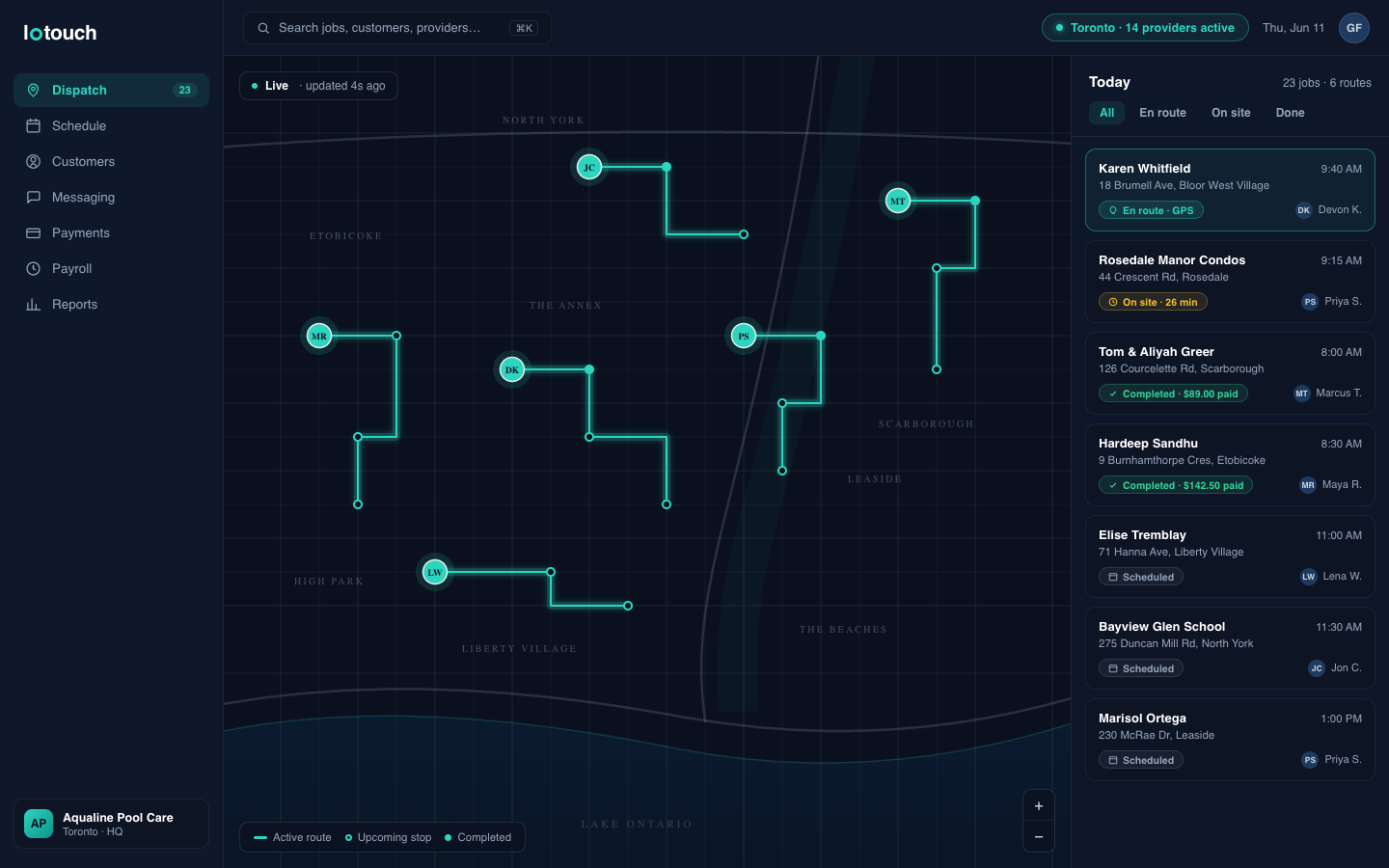
Every provider, every route, live
The dispatch map shows where everyone actually is — teal routes, GPS pins, job statuses — so the inevitable “can you come today?” call drops into the nearest real gap instead of the middle of the map.
Capabilities
What loTouch does for you
The AI plans the day, not you
Set your service areas and crew rules once; the AI sequences every tech's day by real travel time and keeps it dense as bookings land. The nightly ritual of dragging jobs around a map to make tomorrow work just stops being your job.
Drive time checked before a slot is offered
Routing is travel-time-aware, not straight-line: the AI calculates real drive time between jobs before it offers a time, so a booking that looks open on a calendar but torpedoes the route never gets sold. The damage is prevented instead of repaired.
Nearest qualified tech, every time
Assignment weighs live GPS position, territory and qualifications together — the job goes to whoever can genuinely get there fastest and is certified to do it, not whoever answered the phone first. Less unpaid driving per job, more billable jobs per truck.
Bookings steered into clusters
Customers are offered slots on days you're already in their area, so demand consolidates into dense runs instead of scattering across the map — more jobs per day from the same trucks and people, without anyone hand-balancing the calendar.
Same-day work without route damage
Live GPS shows where everyone actually is, so the inevitable 'can you come today?' slots into the nearest real gap, and the AI reassigns to preserve density instead of blowing up the afternoon. The interruption stops being a crisis.
Recurring routes that stay dense
Weekly and bi-weekly visits cluster into standing routes per tech, and one-off jobs fill the gaps around them by location and duration. Density compounds week over week instead of resetting every time an ad-hoc job lands — and you never rebuild it by hand.
One system
Part of the operation the AI runs
Route Optimization isn’t a module you bolt on — it’s one part of the operation the AI runs to your standard, from the search result to the payroll line.
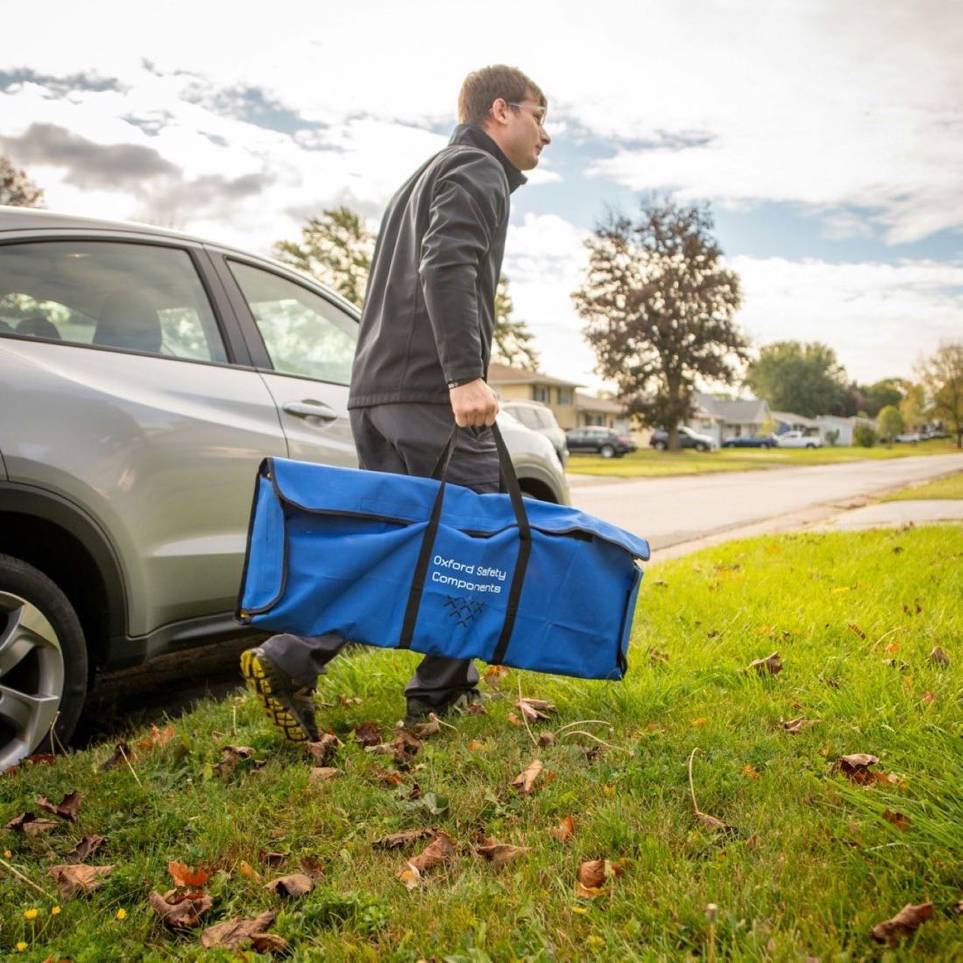
Fewer kilometres between jobs is one more job per truck, per day — same team, same payroll.
Scheduling & Dispatch
Stop being the 7 AM dispatcher. Let AI run the board to your rules.
Local Customer Acquisition
Stop renting customers you should own. Let AI win the local search.
Invoicing, Payments & Payroll
Get your evenings back. Let AI run the money.
Field Service Management
You built a company, not a cage. Let AI run the operation to your standard.
The whole platform
How the six last-mile problems become one closed loop — from the search result to the payroll line.
Industries
See it for your industry
The same loop, shaped to your industry’s rules — certifications, ratios, storm triggers, session packs.
- Music Lessons
- Pool Cleaning
- Swimming Lessons
- Tutoring
- Landscaping
- Cleaning Services
- Home Care (PSW)
- Plumbing
- Electrical
- HVAC
- Handyman Services
- Pet Services
- Personal Training
- Mobile Car Detailing
- Snow Removal
- Pest Control
- Appliance Repair
- Garage Doors & Locksmiths
- Restoration
- Mobile Healthcare
- Fire & Life Safety Inspections
- Driving Schools
- Junk Removal & Moving
- Window Cleaning & Pressure Washing
- Smart Home & EV Charger Installation
- Mobile Pet Grooming
Proven in production
The engine behind loTouch has been running Rockstar Music Central for years
Google page 1
for region + instrument searches across the GTA
$0.90 avg CPC
across 14.6K impressions of supporting paid search
One system
from search result to teacher payroll
FAQ
Questions operators ask us
What does the AI decide here, and what stays mine?
You set the service areas, the crews and the rules. The AI does the planning — sequencing each day by real drive time, assigning the nearest qualified tech, steering new bookings into dense runs, and reflowing when the day goes sideways. You can let it run the routes outright or keep a quick approval on the day's plan. Either way, you stop being the one who optimizes the map every night.
How is this different from a route planner or a maps app?
A route planner sequences the jobs you already booked, after the damage is done. loTouch's AI works upstream: drive time shapes which slots get offered and who gets assigned in the first place, so the schedule is born dense instead of being rescued every evening. You're not planning routes anymore — you're approving ones that already work.
How does route optimization actually win back time and money?
Three ways: less unpaid driving per job means more billable jobs per tech per day; customers are offered slots when you're already nearby, which compounds density; and the hours you used to spend planning the next day disappear, because the AI does it. The margin the windshield was eating, and the evenings the planning was eating, both come back.
What happens when the day goes sideways — cancellations, emergencies, weather?
The AI reflows the schedule by your rules. Displaced jobs move into real gaps with density preserved, urgent work routes to the nearest qualified tech by live GPS, and every affected customer gets their new time by SMS or email automatically. The kind of day that used to mean a phone glued to your ear handles itself.
Does loTouch sync with QuickBooks?
Yes — invoices, payments and payroll records sync to QuickBooks, so your accountant keeps their system and you keep one source of truth. Job data stays exportable; loTouch is built to feed your books, not trap your data.
How does loTouch pricing work?
loTouch pricing is public: implementation from $3,500 one-time and a platform license from $400/mo, sized by team (1–10, 11–25 or 26–60 field providers), plus $40 per provider per month — office and manager seats are free, and end customers are free and unlimited. Payments run at standard processor rates plus a platform fee under 1% on card-on-file volume. See lotouch.ca/pricing for the full model and an instant estimator.
Get started
Tell us about your operation
- 1
Tell us about your operation
Two minutes in the form below — team size, regions, what you run on today.
- 2
See it on your own use case
A walkthrough call, not a sales script.
- 3
Get a scoped proposal
Within days, not months.
- Proven in production — runs a real multi-region business today
- Google page-1 results behind the case study
- A human replies within one business day